
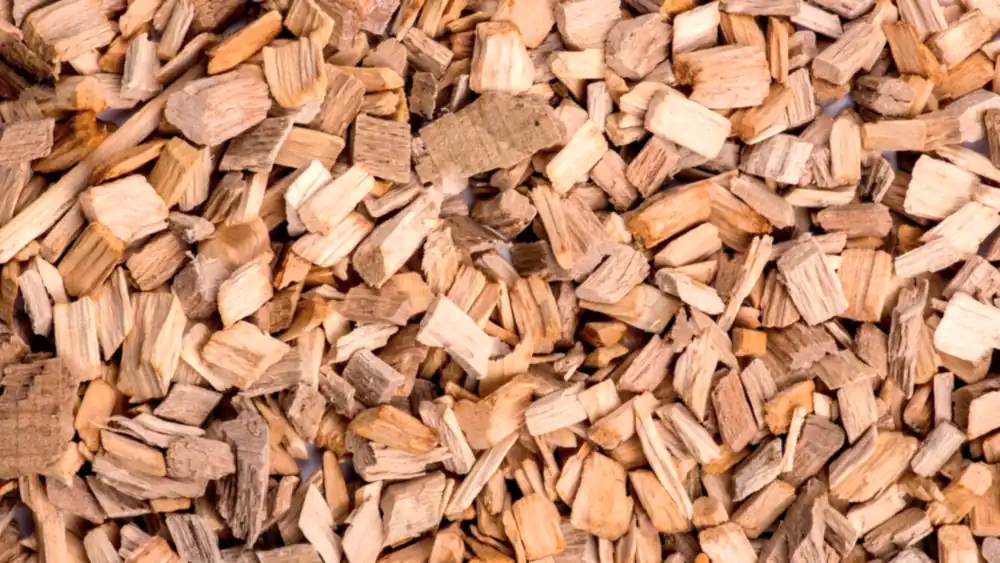
Why woody is in two perfumes out of three
Woody + floral: 645 perfumes. Woody + amber: 542. Woody + citrus: 520. Of the six most common accord pairings in the catalogue, all six contain woody. It is not a fashion, it is a function.
A perfume is almost never built on a single accord. It combines three, four, sometimes six — and these combinations are not random.
Across the 2,061 perfumes analysed, we counted every pair of accords that coexist in the same composition. The result is striking.
The twelve most frequent pairings
| Pairing | Perfumes |
|---|---|
| Woody + Floral | 645 |
| Woody + Amber | 542 |
| Woody + Citrus | 520 |
| Woody + Musky | 452 |
| Woody + Gourmand | 432 |
| Woody + Warm spicy | 410 |
| Floral + Musky | 397 |
| Amber + Floral | 328 |
| Floral + Gourmand | 317 |
| Citrus + Floral | 308 |
| Citrus + Musky | 275 |
| Amber + Gourmand | 266 |
The first six all contain woody. You have to go down to seventh place to find a pairing without it.
Method. Figures established on the 2,061 pyramid pages the OLFACT catalogue held at publication. They describe our listing, not world production — but the order of magnitude is clear and the gap between ranks is too large to be down to sampling chance.
Woody is not a family like the others
With 1,409 perfumes out of 2,061, i.e. 68%, woody is by far the most widespread accord. The second, floral, tops out at 49%.
The explanation is not aesthetic, it is structural. Our analysis of scent pyramids shows that woody materials are base materials: sandalwood 92% in the base, vetiver 83%, cedar 75%, patchouli 78%.
And it is the base that makes a perfume last. A composition with no heavy material evaporates within two hours.
Woody is therefore not a stylistic choice, it is a framework. It is not put in a perfume because you want it to smell of wood: it is put in because without it, nothing is left by noon. It is exactly the role flour plays in a cake — nobody buys a cake for its flour.
That is also why so many perfumes billed as “floral” or “gourmand” end up resembling each other at the end of the day: they share the same framework.
The three major construction patterns
Looking at which families graft onto this framework, three dominant patterns emerge.
Woody + floral: the majority pattern (645 perfumes)
Wood provides longevity, flower provides character. It is the most widespread construction in contemporary perfumery, and it crosses genders — it is found as readily in perfumes labelled feminine as masculine.
It is also the safest pattern commercially, hence the most frequent, hence the most commonplace.
Woody + amber: the maximum-longevity pattern (542 perfumes)
Two base families stacked. The result: perfumes that last, that project, and that cost a lot — our surveys put the median amber bottle at €160, the highest price of all families.
It is the construction of evening and winter perfumes. See our grand occasions selection.
Woody + citrus: the contrast pattern (520 perfumes)
The cleverest of the three. Citrus appears 100% of the time as a top note — it strikes then disappears. Wood takes over.
This pairing creates a perfume that changes markedly over the day: hesperidic in the morning, woody in the afternoon. It is the pattern of most fresh men’s perfumes, and of our office selection.
What this changes for you
If all perfumes seem alike to you, you are statistically right. Two in three share the same woody framework. It is not your nose that lacks training.
To get out of the pack, do not change your dominant family — change the framework. Look for compositions whose base is not woody: a purely amber, purely musky base, or one built on a rare accord such as powdery (4% of the catalogue), green (3%) or aldehydic (0.7%).
And read the pairs, not the lists. When a page announces five accords, look at which ones are really dominant — the intensity of each is displayed on our pages. A perfume that is “woody, floral, amber, musky, citrus” tells you nothing; a perfume where woody weighs 80 and the rest 30 tells you everything.
Explore the 22 scent families or pit two compositions against each other in the comparator, which displays each perfume’s accords face to face.